
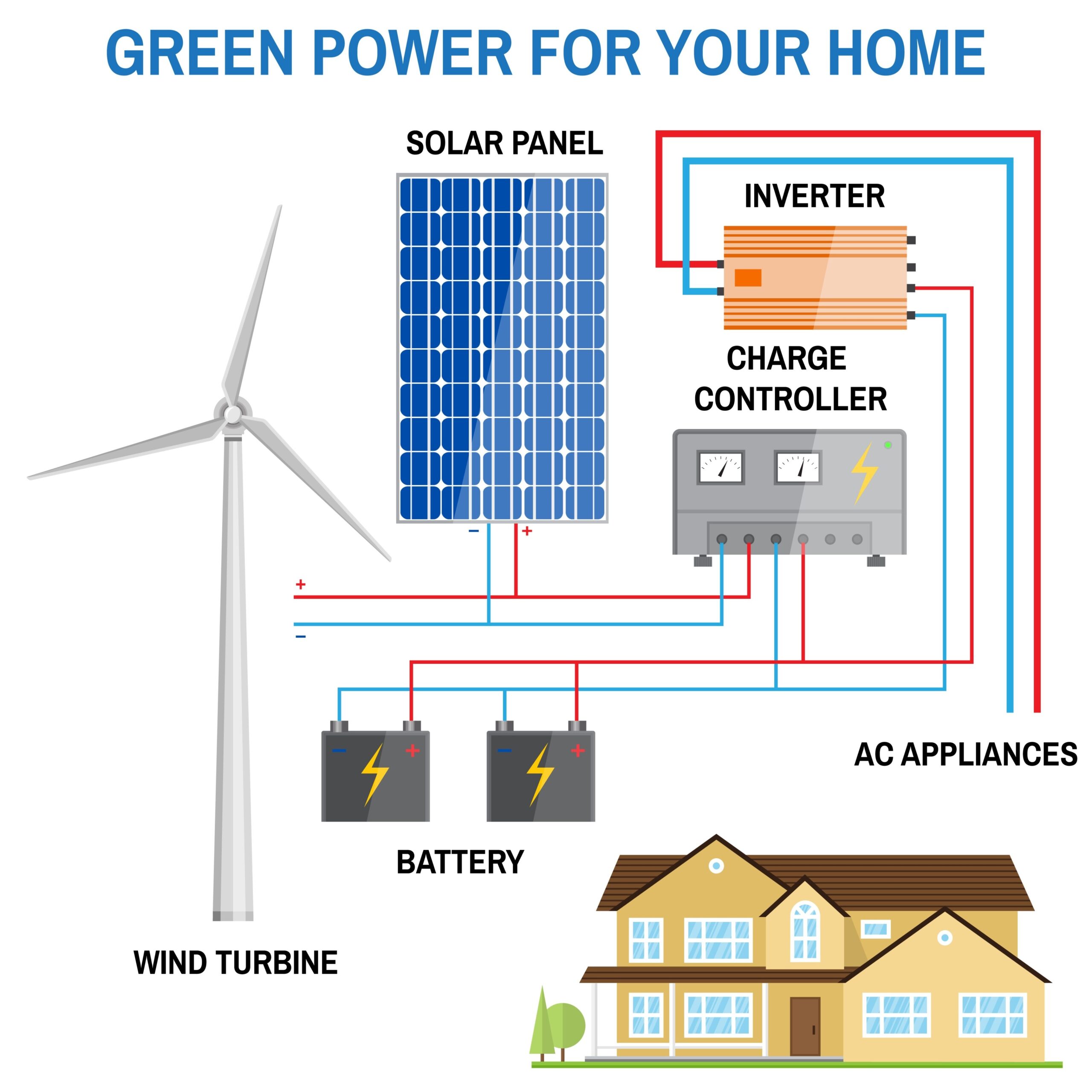
The dream of “24/7 power” in Nigeria has long felt like a distant luxury, usually reserved for those with deep pockets and loud, fuel-guzzling diesel generators. But as we move through 2026, the energy landscape is shifting. With the rising cost of petrol and the unpredictability of the national grid, homeowners are looking for smarter, cleaner ways to stay powered.
We take a close look at the Wind-Solar Hybrid System. While most people are familiar with solar panels, combining them with a wind turbine creates a powerhouse duo that can provide electricity even when the sun goes down or during the cloudy rainy season.
In this comprehensive review, we will explore everything you need to know about this combination: from the technical specifications and the actual costs in the Nigerian market to why this hybrid approach might just become the “gold standard” for energy independence in the foreseeable future.
What is a Wind-Solar Hybrid System?
At its core, a wind-solar hybrid system is a home power plant that uses two different renewable sources to charge a single battery bank.
Solar Panels work during the day, peaking when the sun is highest.
Wind Turbines work whenever there is a breeze, which often increases at night or during stormy weather when solar output is low.
By combining these two, you create a “balanced” energy profile. Instead of relying solely on 6–8 hours of sunlight, you tap into a 24-hour cycle of natural energy.
Specifications: Choosing the Right Components
To build an effective hybrid system, you need to understand the specs of the two main components.
- Wind Turbine Specifications
There are two main types of wind turbines used for residential homes in Nigeria:
Horizontal Axis Wind Turbines (HAWT): These look like traditional windmills with 3 to 5 blades. They are highly efficient but need to be mounted on high elevations (at least 10–20 meters) to catch steady winds.
Typical Power Ratings: 400W, 1kW, 2kW, and 5kW.
Start-up Wind Speed: Look for turbines that start spinning at low speeds, around 2.5 m/s to 3 m/s, which is common in many parts of Nigeria.
Vertical Axis Wind Turbines (VAWT): These have a “spiral” or “egg-beater” shape. They are quieter and can catch the wind from any direction without needing a tail to turn them. They are perfect for urban areas where the wind might be turbulent.
Typical Power Ratings: 500W to 3kW.
Durability: Usually have fewer moving parts and are easier to maintain at lower heights.
- Solar Panel Specifications
For a hybrid setup, you want high-efficiency panels to maximize your roof space.
Monocrystalline Panels: These are the preferred choice in 2026 due to their high efficiency (20%+) and better performance in low-light conditions.
Wattage: Most modern home setups use 550W to 700W panels. A typical 5kVA hybrid system might use 6 to 10 of these panels.
The Hybrid Advantage: Why Combine Them?
Many Nigerians ask, “Why not just buy more solar panels?” While adding panels is great, a hybrid system offers three distinct advantages that a “solar-only” setup cannot match:
A. Seasonal Consistency (The Harmattan Factor)
In Nigeria, the rainy season and the Harmattan period often bring heavy cloud cover or dust that blocks sunlight. However, these seasons are usually accompanied by stronger winds. When your solar panels are struggling at 30% capacity due to clouds, your wind turbine is likely hitting its peak output.
B. Night-Time Charging
Solar energy stops the moment the sun sets. This means your batteries have to do all the heavy lifting from 6:30 PM until the next morning. A wind turbine can continue to trickle-charge (or even fully power) your home during the night, preserving your battery life and ensuring you never wake up to a “low battery” alarm.
C. Battery Longevity
Batteries are the most expensive part of any solar setup. By having a wind turbine provide energy at night, your batteries don’t discharge as deeply. Shallow discharge cycles can extend the life of a LiFePO4 (Lithium) battery by several years, saving you millions in replacement costs.
Cost of Wind-Solar Hybrid Systems in Nigeria (2026)
The cost of a hybrid system depends on the capacity (kVA) and the quality of the components. Below is an estimated price breakdown for various home sizes in Nigeria as of mid-2026.
System Capacity Estimated Cost (NGN) Ideal For
Small Hybrid (1.5kVA) ₦1,200,000 – ₦1,800,000 1-bedroom flat, lights, fans, TV, and laptops.
Medium Hybrid (3.5kVA) ₦3,500,000 – ₦5,200,000 3-bedroom home, fridge, TV, fans, and pumping machine.
Standard Hybrid (5kVA) ₦6,500,000 – ₦9,000,000 Full household power, including one inverter AC and freezer.
Premium Hybrid (10kVA+) ₦15,000,000 – ₦25,000,000 Large villas, multiple ACs, and small businesses.
Budget Breakdown (Estimates per Component):
Wind Turbine (1kW Horizontal): ₦400,000 – ₦950,000
Wind Turbine (2kW Vertical): ₦1,200,000 – ₦1,500,000
Solar Panels (600W Mono): ₦120,000 – ₦150,000 per piece
Hybrid Inverter (5kVA): ₦450,000 – ₦750,000
Lithium Battery (5kWh/48V): ₦1,100,000 – ₦1,200,000
Is Your Location Right for Wind?
Before investing, you must check your local wind speeds. Nigeria’s wind map varies significantly:
High Potential: Coastal areas (Lagos, Port Harcourt, Calabar) and Northern highlands (Jos, Katsina, Kano, Sokoto).
Moderate Potential: Central states like Abuja and parts of Oyo/Ondo.
Low Potential: Heavily forested areas or deep valleys where wind is blocked by trees or mountains.
Expert Tip: If you live in a built-up area like Ikeja or Garki, a Vertical Axis Turbine mounted on your rooftop is much more effective than a tall horizontal windmill, as it handles “choppy” air between buildings much better.
Maintenance and Lifespan
One of the best features of this combination is its longevity.
Solar Panels: Typically last 25+ years with just occasional cleaning.
Wind Turbines: Quality turbines last 15–20 years. They require a yearly check-up to ensure bolts are tight and bearings are lubricated.
Lithium Batteries: Modern LiFePO4 batteries in 2026 are rated for 10 years of daily use.
Conclusion: Is It Worth It?
The initial “sticker shock” of a hybrid system can be high. However, when you calculate the cost of running a petrol generator (fuel, oil, repairs) over 5 years, the hybrid system pays for itself.
By combining wind and solar, you aren’t just buying equipment; you are buying peace of mind. You no longer have to worry if the sun will shine tomorrow or if the “fuel price” has gone up again. You are literally harvesting the environment to power your life.
For Renewable Energy (solar and wind) Consultations, Our Contact: 09014789126 Phone or WhatsApp
Chad’s 5MWp Solar Hybrid Power Plant: Powering Africa’s Energy Future